Learn more and sign the petition: https://savebrightongreenway.com
One of the most encouraging stories unfolding in Greater Victoria is not about a politician, developer, or government program. It is about ordinary residents who decided that the places they love are worth speaking up for.
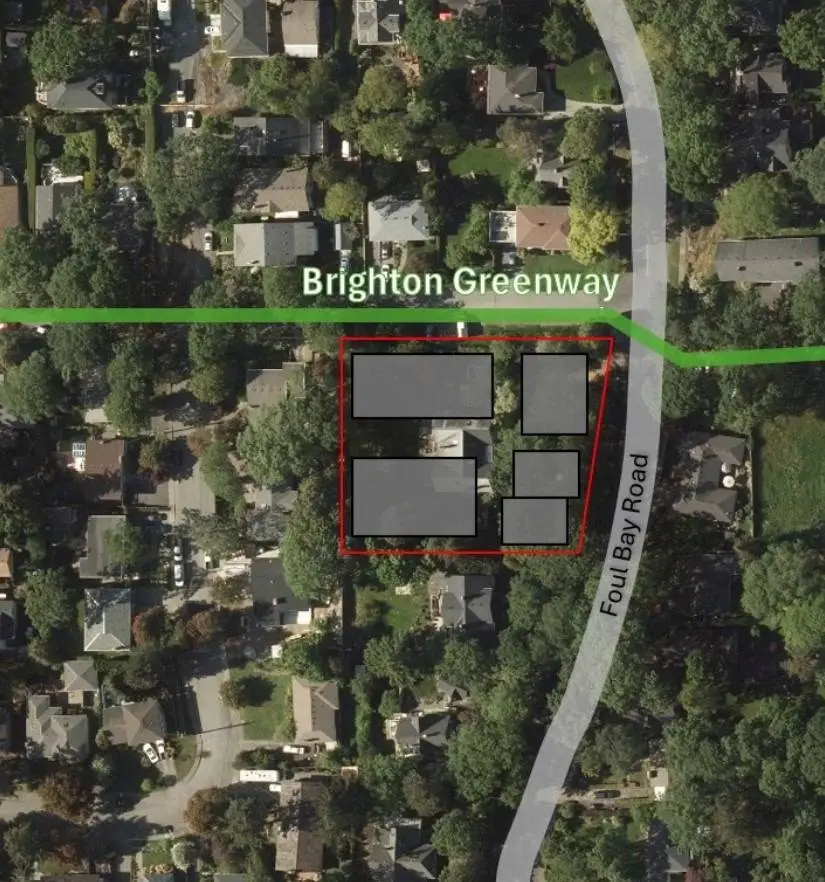
The Save Brighton Greenway movement emerged in response to a proposed 24-unit townhouse and condominium development at 960 Foul Bay Road in Oak Bay. While many residents recognize the need for additional housing, concerns quickly arose about the scale, design, traffic impacts, tree removal, and the future character of the Brighton Greenway corridor.
What makes this effort noteworthy is that it reflects a growing trend across the CRD: citizens organizing themselves to participate in decisions that shape their neighbourhoods.
The Brighton Greenway is more than a transportation route. It forms part of the Centennial Trail network and functions as a community gathering space used by pedestrians, cyclists, children, seniors, dog walkers, and wildlife alike. Residents describe it as a green corridor connecting neighbourhoods and providing a rare sense of refuge within an increasingly urbanized landscape.
In response to the proposal, neighbours created a website, circulated a petition, organized public outreach, attended meetings, and encouraged residents to engage directly with elected officials. Their concerns include pedestrian safety, increased traffic, the removal of mature trees, impacts to Garry oak habitat, and the precedent that large-scale redevelopment along greenways could establish for the future.
From a Squirrel for Mayor perspective, the most important lesson is not whether one agrees or disagrees with every aspect of the proposal. The lesson is that healthy cities require active citizens.
Too often public engagement occurs after key decisions have already been made. Residents are then forced into reactive campaigns to protect the places they value. The Brighton Greenway story demonstrates that communities are willing to participate, contribute local knowledge, and advocate for outcomes that balance housing, nature, safety, and neighbourhood character.
This is precisely why Squirrel for Mayor continues to advocate for better ecological mapping, public access to environmental data, stronger urban forest governance, and earlier community involvement in planning decisions. When residents can see what exists before it is threatened, conversations become more informed and less divisive.
The future of Victoria will require more housing. It will also require protecting the green infrastructure that makes our communities livable. Those goals are not mutually exclusive.
Gentle density should mean more than the number of housing units on a site. It should also mean being gentle on the environment in which we live. It means being gentle on the nesting sites, food sources, and habitat connections relied upon by the more-than-human world.
True gentle density seeks to fit development into existing ecological systems rather than requiring those systems to disappear for development. It asks how we can add homes while retaining mature trees, protecting habitat, preserving biodiversity, and maintaining the natural infrastructure that provides shade, stormwater management, cooling, carbon storage, and ecological resilience.
A Garry oak does not ask how much money is needed for your next golf game. A songbird does not ask whether your property assessment increased this year. A native bee does not care about quarterly economic growth. Yet all of them quietly provide services that sustain our communities and our lives.
Whether the issue is a Garry oak tree, a mature urban forest, a neighbourhood greenway, or a community park, the principle remains the same: people care deeply about place. When citizens organize to defend the landscapes that shape their daily lives, democracy becomes more than a vote every four years—it becomes stewardship.
The Save Brighton Greenway campaign is a reminder that communities are not passive observers of change. They are active participants in it.
Know of a greenway, Garry oak ecosystem, urban forest, or neighbourhood space that deserves attention? Squirrel for Mayor wants to hear from you. Community stewardship begins with knowing what we have before it’s gone
Quick facts:
Greenspace / Walkway
- Plans to Destroy All Trees on the Lot, Including Iconic Garry Oaks: This would be a devastating blow to the landscape and the community that cherishes them. These trees aren’t just beautiful; they are vital to our ecosystem. The current property is home to deer, owls, hawks and other wildlife.
- Massive Reduction in Green Space, Sets a Dangerous Precedent for the Walkway: The proposed development will carve away at the Greenway, cutting into the very heart of our green space. This reduction sets a troubling precedent, signaling that any of our remaining natural areas are at risk of being bulldozed for profit
- 40-Foot Tall Townhomes, Looming Over the Brighton Walkway: These towering structures will cast long shadows over the tranquil Brighton Walkway, turning a peaceful space into an intimidating, overcrowded environment. The serenity and safety that local residents cherish will be permanently disrupted by these buildings.
- Destruction of Garry Oak Meadow, Adjacent to Centennial Trail and Brighton Walkway: The development threatens the destruction of Garry Oak Meadows—an irreplaceable ecological treasure that forms a critical link in the Centennial Trail and the iconic Brighton Walkway. This loss would impact both the natural beauty and the integrity of our cherished green spaces in both Oak Bay and Victoria.
- Situated Next to Other Vital Garry Oak Meadows: The development will directly encroach upon other precious Garry Oak Meadows, further jeopardizing not just this site, but the wider ecosystem these meadows support. The interconnectedness of these meadows is essential to preserving local wildlife and plant species.
- No Natural Permeability in the Plan; Total Canopy Loss Will Lead to Higher Temperatures, Increased Flooding Risk, and Habitat Destruction: The complete elimination of tree cover combined with the lack of permeability (with 32 parking spots) in the design will exacerbate climate change effects, raising temperatures in an already vulnerable area, increasing flood risks, and wiping out vital natural habitats. The consequences of this reckless development will be felt by both our environment and our community for years to come.
Did you know?…
The Brighton Green Space and Greenway is a beloved sanctuary nestled in the heart of Oak Bay.
This treasured green space is threatened by the Travelbea Marking development. This isn’t just a walkway; it’s a lifeline for the neighbourhood, stretching about a kilometre through a peaceful path that connects the different corners of Brighton Avenue in Oak Bay with a Greenway in Victoria.
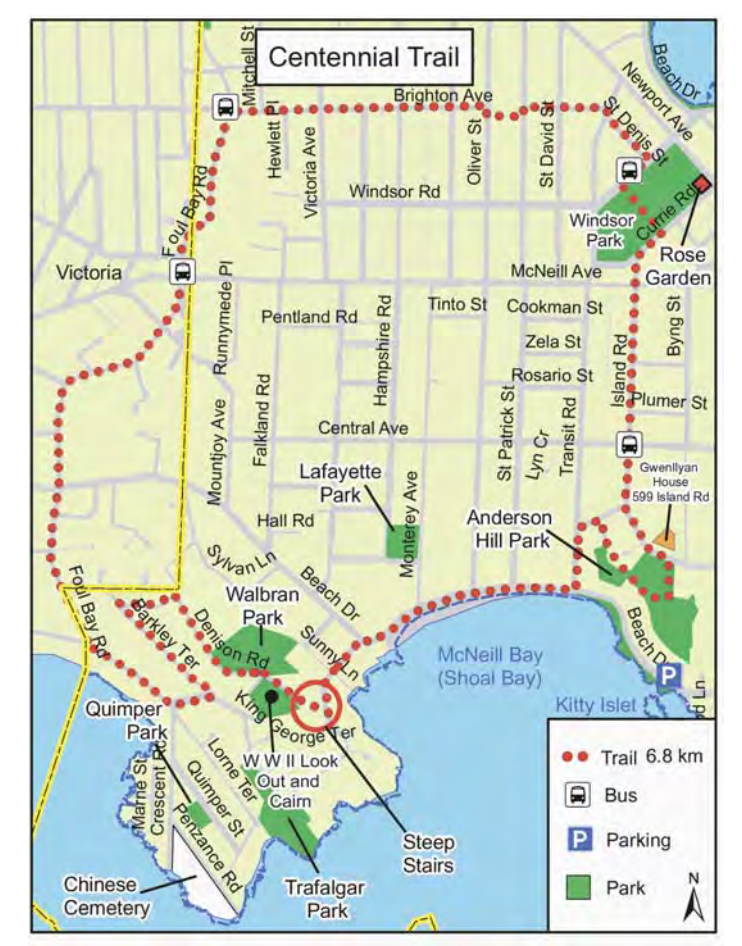
It’s part of the Centennial Trail, a 7-kilometre route that winds through Oak Bay, offering both locals and visitors a rare opportunity to reconnect with nature in an urban setting.
The path runs along Brighton Avenue and with each step, it feels like you’re walking through a piece of history. As you wander, you’re greeted by rustic concrete staircases and thoughtfully planted greenery and Garry Oak Meadows that provide a tranquil escape.
The benches scattered along the way invite moments of reflection and connection with the beauty of the surroundings. Brighton Greenway, is shaped by the merging of older streets and is as a testament to the area’s rich, natural beauty. Together, these green spaces create a vital connection to the land, a rare and irreplaceable treasure that the community holds dear.
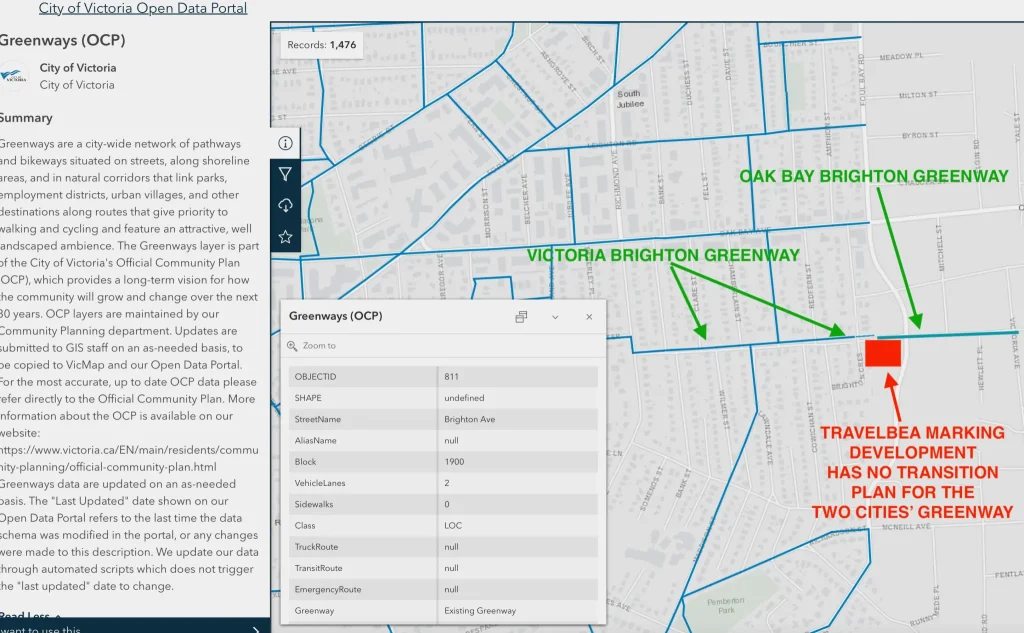
The Travelbea Marking development has no plans for the transition from the Oak Bay Brighton Greenway to the Victoria Brighton Greenway (from saveblightongreenway.com)
Learn more and sign the petition: https://savebrightongreenway.com
Ongoing Planning Concerns Remain
While the latest revisions to the proposal include minor design changes, many residents argue that the fundamental concerns raised throughout the process remain unresolved.
Among the most significant concerns is the continued reliance on the Heritage Revitalization Agreement (HRA) to effectively upzone the entire property, despite the Official Community Plan identifying a different approach. Critics note that Oak Bay staff recommended concentrating the higher-density zoning on the Lawson Residence parcel (Lot 2) while retaining the remainder of the site (Lot 1) under the existing R-4 zoning framework.
Residents also continue to question the proposed 120% floor area ratio, which substantially exceeds the 80% maximum permitted under the R-4 zone. Concerns have also been raised about reduced setbacks along the west property line, limited separation between buildings, and the potential for significant overshadowing of both the historic Lawson Residence and adjacent outdoor spaces.
Additional concerns focus on Building C’s southern edge, where a pedestrian access corridor would run directly beside neighbouring rear yards. Opponents argue this creates privacy, lighting, and CPTED-related issues while diminishing the park-like character that currently defines the area.
While some landscaping metrics have improved, critics note that impermeable surface coverage remains high and that the proposal still falls short of several landscape requirements intended to preserve green space. Changes to roof design and building height are also viewed by some as largely cosmetic, with the overall building massing remaining substantially unchanged.
For many residents, the debate is no longer simply about whether housing should be built. Rather, it is about whether the project respects the intent of Oak Bay’s Official Community Plan, fits within the surrounding neighbourhood context, and appropriately balances new housing with heritage conservation, mature tree retention, and the character of the Brighton Greenway.